Noah Lang · 8 September 2026
Bay Area Seafood Facilities Boost Freezing Infrastructure Amid Rising Harvest Volumes and Changing Climate Conditions
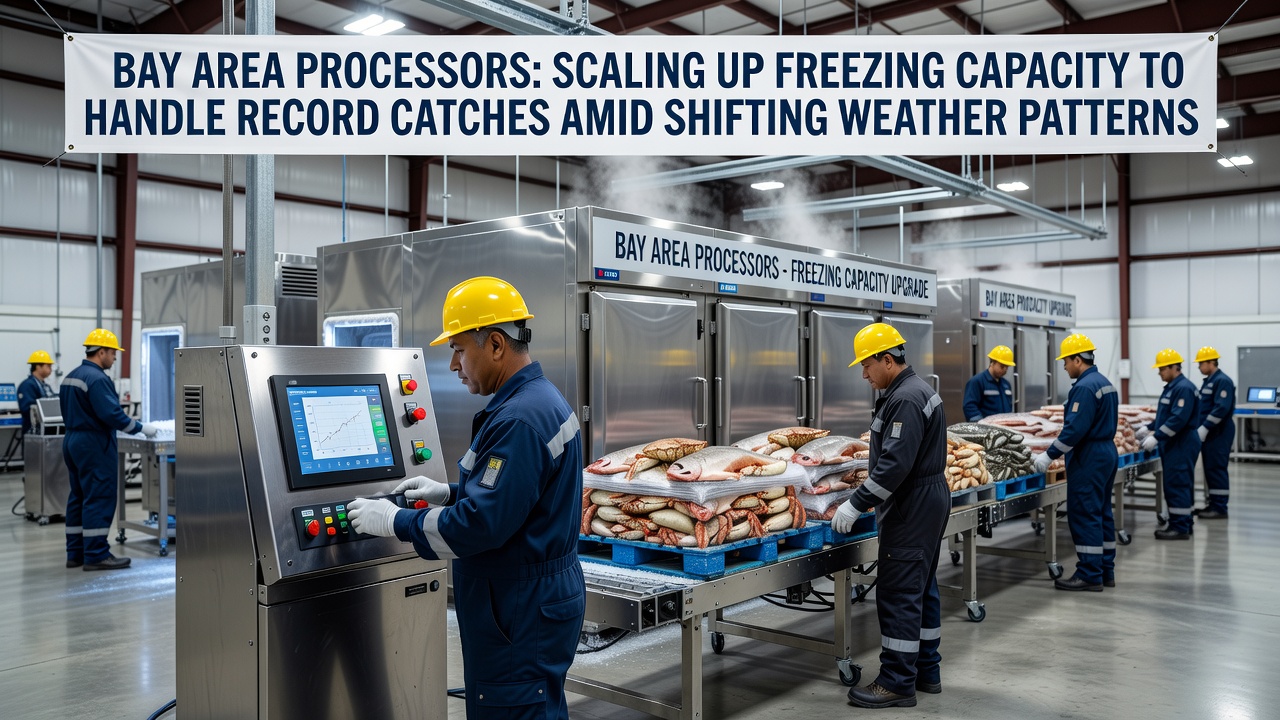
Bay Area seafood processors have increased their freezing capacity in response to higher catch volumes linked to shifting weather patterns that have altered fish migration and abundance in coastal waters. Facilities around San Francisco Bay and nearby ports reported upgrades completed ahead of the fall season, with new blast freezers and cold storage units coming online during September 2026 to manage larger deliveries from commercial vessels.
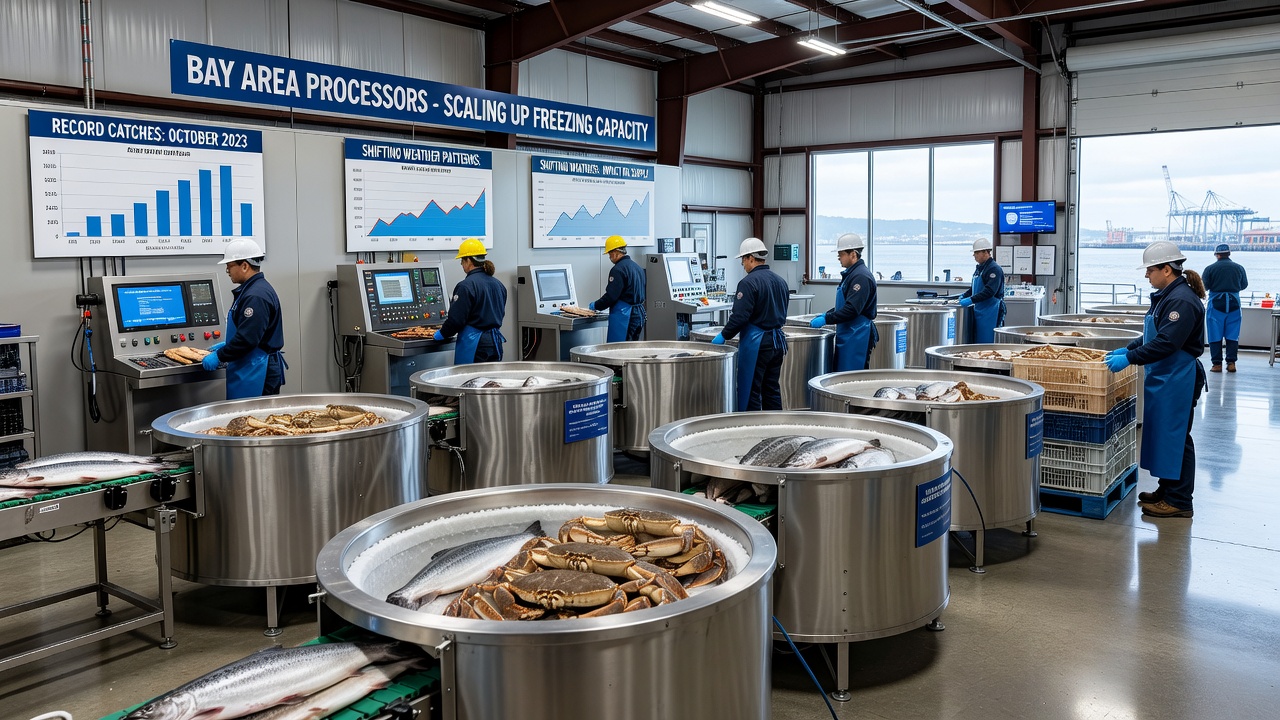
Data from regional monitoring programs shows that warmer ocean temperatures and altered upwelling cycles have concentrated certain species closer to shore, leading to record landings at ports such as Half Moon Bay and Sausalito. Processors responded by installing additional refrigeration lines and expanding warehouse space, which allowed them to preserve more product without spoilage during peak periods.
Weather Patterns Drive Catch Increases
Shifting weather patterns observed over the past several years have influenced Pacific fisheries, with evidence from long-term records indicating changes in sea surface temperatures and current flows. According to reports from the National Oceanic and Atmospheric Administration, these conditions contributed to higher availability of species like Dungeness crab and rockfish in nearshore areas during late summer and early fall 2026. Processors noted that daily deliveries often exceeded previous seasonal averages by substantial margins, prompting investments in infrastructure to maintain product quality.
One processing plant in Richmond added two new tunnel freezers capable of handling several tons per hour, while another facility near the Port of Oakland upgraded its ammonia-based refrigeration system to support continuous operation. These changes occurred while fleets adjusted harvest schedules around variable weather windows, which sometimes produced concentrated landing days that strained existing capacity.
Industry Adjustments and Equipment Upgrades
Industry groups tracked the expansion across multiple sites, with figures revealing that total freezing throughput in the Bay Area rose by measurable percentages compared with 2025 levels. Companies coordinated with equipment suppliers to install modular units that could scale quickly, and several operations integrated automated sorting systems to speed intake from boats. This approach helped reduce wait times at docks and minimized waste during high-volume periods.
Workers at these plants described routines that now include round-the-clock monitoring of temperature logs and inventory tracking, while maintenance teams performed preventive checks on compressors and condensers to avoid breakdowns. Training sessions covered updated handling protocols for the increased variety of species appearing in catches, including some that had shifted ranges due to environmental factors.
Supply Chain and Market Implications
Expanded freezing capacity supports longer storage times, which in turn allows distributors to ship product to inland markets and export destinations without quality loss. Data collected by state agencies shows that preserved catches from the Bay Area reached processing plants in other parts of California and neighboring states more consistently during 2026. This development aligns with broader trends where climate-related shifts affect both harvest locations and preservation needs.
Observers note that similar capacity increases have appeared in other coastal regions, yet the Bay Area's concentration of small and mid-sized processors created a localized response tailored to its port infrastructure. Collaboration with local utilities ensured that power demands for new equipment could be met without disruptions, while some facilities explored backup generators to maintain operations during storms.
Regulatory and Environmental Context
State and federal guidelines govern the upgrades, requiring compliance with energy efficiency standards and wastewater management rules. Processors submitted plans that incorporated insulation improvements and refrigerant recovery systems to meet these requirements. Reports from Fisheries and Oceans Canada on comparable northern Pacific conditions provided additional context for understanding transboundary fish movements, though Bay Area operations focused on domestic data sources for planning purposes.
Record catches also prompted discussions among harbor authorities about dock space allocation and unloading efficiency, yet the primary emphasis remained on freezing infrastructure to match supply volumes. September 2026 saw several facilities reach full operational status with their new equipment, coinciding with peak migration periods for targeted species.
Conclusion
Bay Area processors have adapted their operations through targeted investments in freezing technology, directly addressing the demands created by elevated catch levels tied to evolving weather patterns. These developments reflect measurable responses documented in industry and agency records, with ongoing monitoring expected to track further changes in both environmental conditions and processing capabilities.